


3.2 Planning environments for learning
The classroom environment can help shape a child’s identity as a powerful player in his or her own life and the lives of others. To foster such an environment, teachers must go deeper than what is merely seen at eye level and develop a deep understanding of the underlying principles and of children’s thinking, questions, and curiosities” (Biermeier, 2015, para. 3).

In the city of Reggio Emilia in northern Italy, early childhood programs introduced the concept of the environment as the “third teacher” – besides the two adult educators in an early years classroom (the Reggio Emilia approach is explored further on p.3.3 of this module). This can be a useful concept for thinking about the design of environments for children. The play space, whether it is indoors or outdoors, can provide:
- multi-sensory experiences
- information
- invitations to explore
- meaningful opportunities to use a wide variety of interesting materials and tools
- time and spaces to practice and develop skills – both as individuals and with other children and adults
As you watch the video, which shows play areas in different child care programs in Manitoba, consider the attention to detail and what values are communicated to children.

Now watch the next video to hear Sheila Williams-Ridge, director of the Lab School, explain how intentionality and predictability factor into the educators’ decisions about how to set up the environment.

Listen as Dr. Janette Pelletier describes the difference between classrooms that do not encourage play-based learning and those that do.
Think about a play space you are familiar with:
- Does it provide opportunities for creative expression, choices and exploration?
- Is it predictable, calm and attractive or cluttered and chaotic?
- Is there an atmosphere of respect and caring?
- Does it facilitate children using materials in unique ways? Are children allowed to combine materials from different areas?
- Does it engage children intellectually, emotionally, socially and physically?
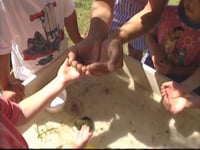
Setting up the environment to encourage play and exploration does not have to be costly. Natural items such as small stones, sea shells, leaves, sticks and seeds can be collected and used for a variety of activities. In the next video, watch as children in Tajikistan use a variety of natural materials in their play. Pay attention to the varied opportunities for language and mathematical learning in the play.


Programs for children should be emotionally and intellectually nurturing and avoid becoming institutional in nature. Environments that are engaging, varied and well-organized, rather than chaotic and stressful or dull and under-stimulating, help children become interested and focused in their play.
Something to try…If you work in an early childhood setting, take a picture of the play spaces and areas in the room. What do you see? What feeling do you get when looking at the pictures? Are the spaces welcoming, organized and interesting? Or are they cluttered, visually over-stimulating and disorganized?
Inclusion
For some children, being an active participant means that the environment needs to be adapted in some way. Listen to Pat Furman, executive director of Inspired by Wonder (formerly the Robertson Early Enrichment Program) in Winnipeg, describe how the staff at her centre strive to create an environment that supports inclusion of children. Then, watch the “parent perspective” video to hear from a parent whose child attends this centre. Consider how their perspectives compare.
Think about a children’s program you are familiar with. How does the environment support inclusion? Think about the overall environment, including the equipment, materials and arrangement of space. How else could staff support children’s sense of belonging, their relationships with others, and their participation in play experiences and routines?
Outdoor environments
While people tend to picture the indoor classroom space when they think about environments for learning, it is important to pay equal attention to the outdoor environment and the rich opportunities it provides for learning and development. In the next video, Williams-Ridge discusses outdoor play.
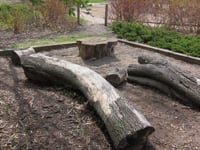
The next video is of the outdoor area of the Kittiwake Children’s Centre in Vancouver, British Columbia. It was filmed with special equipment that allows for 360° viewing. As you watch, use your cursor, or finger on a track pad, to rotate the angle that you see. N.B. Internet Explorer and many versions of Safari do not allow 360° viewing so you will have to use an alternate internet browser to see this properly (e.g., Firefox, Chrome).

These next two videos provide wonderful examples of children playing outdoors. The first video is from the series, Our Children Our Ways. It features First Nations and Inuit early childcare programs and was filmed in a variety of locations and seasons throughout Canada. The second video is an example of children at a school in East Africa playing outside.

Can you think of some children’s activities, which typically occur indoors, that could provide additional learning opportunities if they were held outdoors?
Are there any ideas from these videos that inspire you to try something new to facilitate children’s connections with nature?
Learn more about outdoor play opportunities with this resource sheet from the Canadian Child Care Federation.
Think about the environments you like to spend time in – environments that stimulate you or relax you. What is it about those environments? We often spend considerable time setting up environments for ourselves either at home or work. The environments that children spend time in everyday impacts their development and learning and the same consideration needs to be invested in their environments. Paying attention to how the environments – both indoors and outdoors – look, what is available and how it is set up is a key task for everyone who works with and cares for young children. The next page will look at curriculum in early childhood education and attention to environments is an essential piece of curriculum.


