


2.2 Literacy
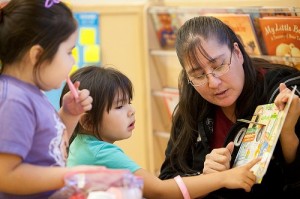
Children first learn to read – to connect sounds to print symbols – by building on their oral language. One of the most effective ways to introduce children to reading is through picture books. When adults – parents, other family members or educators – read to children, they expand children’s vocabulary. Reading to children makes the meaning of print visible and motivates them to learn through reading.
In each of the following videos watch as a mother and child read a picture book together.


What does each mother do to encourage her son’s developing language abilities?
What does she do to encourage his interest in books?
The two readings that follow are part of the research summary, Language and literacy: From birth…for life. It was a joint project of the Canadian Child Care Federation and the Canadian Language and Literacy Research Network. The first reading reviews developmental milestones for infancy through age six and the second reviews evidence-based strategies for supporting language and literacy development. Try the quiz to review what you have read.
In the next video, Dr. Janet Werker describes some research looking into the question of whether early language development can predict later language and literacy abilities.
Werker describes research results that show young children’s phonological awareness can predict reading readiness. What kinds of activities and games can early childhood education programs include that would foster young children’s phonological awareness?
What about in our daily interactions, how can adults help children notice the sound properties of letters and words?
In the next video, Dr. Lillian Katz, professor emerita at the University of Illinois at Urbana-Champaign, explains the difference between having a skill and the disposition to use it. This is especially relevant for skills related to literacy and she describes the importance of helping children become enthusiastic about reading.
Talking with children and introducing them to the wonderful world of books fosters children’s language and early literacy. Our role as adults is to nurture children’s curiosity and willingness to learn, observe their interests, expand their vocabularies and foster their understanding of the meaning of print. Creating such environments for children provides a foundation that can have a life-long influence on their language and literacy skills.


