


2.3 Emotional learning
If you ask most parents what they want for their children in life, their answer is that they mainly want their children to be happy. But how does this happen? Can we teach happiness?
Watch the next video to learn more.

What role do parents play in helping their children learn to be happy?
How might you, in your work with children, support parents in helping their children learn to be happy?
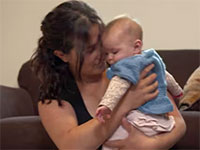
Happiness is one of a wide spectrum of emotions that develop in early childhood. Children begin with a few simple emotions (happiness, sadness, anger) but, especially as they develop social cognition, gradually display other more complex emotions (jealousy, shame, satisfaction). In the next video, notice how the parent labels and supports her baby’s emotional responses.
The following reading, from the Encyclopedia on Early Childhood Development, provides an overview of emotional development in early childhood and discusses how children develop emotional competence. Try the interact that follows to review some concepts from the reading.
Aggression
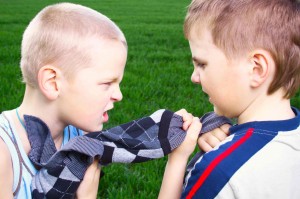
Are all children aggressive? What is the best way to handle childhood aggression? All children demonstrate some aggression early in life, especially as toddlers. Learning to channel aggression in socially acceptable ways is key to developing social competence, including positive peer interactions.
In this section, you will discover that some commonly held beliefs about childhood aggression are being challenged. For example, you will learn that aggressive behaviours, rather than being something that children learn as they get older, is something that is evident in babies, peaks in toddlerhood and that children unlearn as they grow older. Similarly, you will also learn how play fighting, often shunned as encouraging violence, is actually a useful tool for children to learn to control real aggression.
Dr. Richard Tremblay, a child psychologist at the University of Montreal, has been studying the development and path of aggression from early childhood to adolescence and beyond for many years. Listen as Tremblay begins this discussion of childhood aggression by describing the Montreal Longitudinal Study.
Now Tremblay highlights an intervention that was implemented with boys who showed high risk behaviors.
Parents and caregivers often agonize over the violent play that children seem so naturally attracted to. It is common for adults to redirect or outright ban this type of play. As it turns out, however, there are valuable lessons to be learned from play-fighting also commonly referred to as rough-and-tumble-play.
In the next video, Marc Battle and Melinda Walden – both Early Childhood Education instructors at Red River College – discuss rough and tumble play among school-age children.
Have you observed children showing an interest in play-fighting and rough and tumble play when it was not allowed? How did the children react?
How would you explain the benefit of rough and tumble play to parents and other caregivers?
Can you think of some simple rules that could be put into place to allow this type of play when children are showing an interest in it?
The following report by Tremblay, Gervais and Peticlerc (2008) is a comprehensive look at the research on aggression among young children. It includes a discussion of what can be done by parents, educators and society. Skim through this entire report, but be sure to read the Introduction, pages 2-3, and Care that Fosters Development of Peaceful Interaction, pages 17-19.
You are asked to summarize the tips on “intervening to support peaceful behaviour and discourage physical aggression” (pages 17-19 in the report) and present to your coworkers. What five points would you share?
Understanding that all children demonstrate aggression in the early years highlights the importance of our role as adults in guiding children to learn socially acceptable ways of interacting specifically when dealing with frustration or conflict.


