


3.3 Valuing play
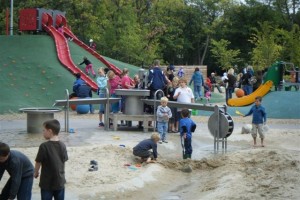
Article 31 of the United Nations Convention on the Rights of the Child (CRC) recognizes the right of the child to engage in play and the provision of appropriate and equal opportunities for play (UNICEF Office of Research-Innocenti, n.d.).
During play, children have opportunities to practice the type of skills that build competence and coping skills – flexible thinking, focused attention, goal-directed behaviour, and negotiation and cooperation with peers.
The next video shows a spontaneous game of football (soccer) in Tajikistan. As you watch, look for examples of the children demonstrating coping and competence skills.

Unstructured play happens when children follow their instincts, ideas and interests without an imposted outcome” (Canadian Public Health Association, 2019a, p. 3).
While adults can play a role in directly supporting children’s play, it is important for children to have opportunities for unstructured play, which allows them to take the lead and explore without too much adult structure. The Canadian Public Health Association (CPHA) has produced a number of resources to promote the value of play.
How could you use these infographics to promote play?
Facilitating play
What is the adult’s role in facilitating play?
Watch the following two videos to see different ways educators facilitate children’s play. The first video is of a child and educator in the dramatic play area. The second is of a group of children playing with blocks and cars over an extended period. Notice how the play evolves in each video. Note the coping and competence skills you see the children demonstrating and the role of the adults.


How did the adults in the program contribute to the play experiences – both before and during play?
In the next two clips, listen as Dr. Carl Corter, professor emeritus in Applied Psychology and Human Development at the University of Toronto, points out why it is important to attend to and sometimes structure children’s play.
Play is important for all children in all kinds of contexts. In the next video, Sheila Williams-Ridge, director of the Shirley G. Moore Laboratory School at the University of Minnesota, discusses how play can enhance a child’s understanding after a new experience – in this case, a visit to the doctor.
Williams-Ridge describes that one child was having a difficult transition to school after a doctor’s appointment. Do you think it is important for an educator to change their plan for the day in order to support individual needs like the example in the video?
In the healthcare field, medical play is a therapeutic intervention that can empower children to face their fears. In the next video, two child life specialists describe the importance of medical and of children being active participants in the health care process.
In the next scene, the child life specialists describe and show how special medical puppets are used in a medical play session.

Why is this type of hands-on play experience beneficial for children who are going to be encountering a medical procedure?
Can you think of situations other than for medical procedures where this kind of play experience would be helpful?
Active play
Active play optimizes brain development, promotes physical growth, and fosters social and emotional development. Young children come to understand their world, navigate their surroundings and learn to negotiate with others. Children develop a repertoire of flexible responses to situations they create and encounter, develop self-regulation and learn to overcome day-to-day challenges.
The following reading from the Encyclopedia on Early Childhood Development explains why active play is essential for young children and offers concise guidelines to parents.
The following website is from Ontarios’ Best Start Resource Centre. It provides a variety of facts, tips and resources for both parents and professionals to promote physical activity in the early years.
Risky play
Many child development experts are concerned about over-protective approaches to child rearing – commonly referred to as, “helicopter parenting” and “bubble wrapping” children. These practices could make it hard for a child to develop a sense of competence and the ability to cope in difficult situations. One response to counter these trends is a movement among educators to encourage risky play, which includes the possibility of injury. While on the surface this seems to go against the adult obligation to protect children, many people are promoting providing children with opportunities to take chances with “risk”, albeit with certain parameters. In the next video, two early childhood educators, Marc Battle and Melinda Walden, explain risky play.
Now listen as Marc Battle and Melilnda Walden describe a project they did with a group of school age children that involved risky water play on a riverbank.
The next reading, from the CPHA, defines and discusses risks and hazards as they relate to children’s play and playgrounds.
Has what you have read and watched on this page influenced your thoughts about play in childhood?
Are there ideas you want to explore with children?
The foundation of children’s coping and competence lies in early brain development and is influenced by their experiences. Supportive caregiving, positive relationships and healthy environments can impact children’s abilities to self-regulate, handle new situations and deal with emotional challenges. People who work with young children should have an understanding of practices and supports that make a difference.
You have reached the end of the Coping and Competence Module. Researcher transcripts, references, and links related to the module topics are available on the next page.


