Developmental researchers use the scientific method to achieve four goals: to describe, explain, predict, and influence human development from conception to death” (Boyd, 2025, p.10).
The survey/questionnaire method is often used when researchers want to learn about people’s experiences. Listen now as Dr. Maureen Heaman, professor emerita, College of Nursing, University of Manitoba, talks about what was involved in developing a questionnaire for quality of prenatal care – an emerging area of research.
VIEWHeaman – questionnaire development (2:18)
Developing a questionnaire to gather data is often a complex and detailed process. Researchers must consider what they want to ask and how best to phrase those questions to get accurate and meaningful responses. As we can see from Heaman’s example, a significant amount of time, thought, collaboration and testing is required.
Sharing a common characteristic is what links a cohort group together. Listen to the following video clip as Dr. Stephen Lye, professor in the departments of Obstetrics & Gynaecology and Physiology & Medicine at the University of Toronto as well as executive director of the Alliance for Human Development at the Lunenfeld-Tanenbaum Research Institute, talks about the Ontario Birth Study and a related cohort study called “TARGet Kids!. Both cohorts will be part of the Ontario Family Health Study which will look at data collection over a significant period of time, which is known as longitudinal research.
VIEWLye – cohort studies
Recruiting prenatal women for the Ontario Birth study has begun at Mount Sinai Hospital and more recently at St. Michael’s Hospital in Toronto with hopes to expand recruitment throughout Ontario. Next, Dr. Alan Bocking, professor, Department of Obstetrics & Gynaecology at the University of Toronto, gives a couple of examples of early data from the Ontario Birth Study being analyzed using a transdisciplinary team approach.
VIEWBocking – early data examples (1:48)
Watch as Dr. Alison Fleming, a founding member of the Fraser Mustard Institute for Human Development and professor in the Department of Psychology at the University of Toronto, discusses the value of studying both humans and animal species for research.
VIEWFleming- animal research (3:04)
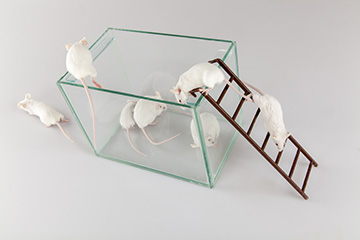
Animal models have been essential in advancing our understanding of prenatal development, demonstrating that environmental exposures such as stress, nutrition, and substance use can alter fetal brain development, gene expression, and long-term behavioural outcomes through biological mechanisms including hormonal and epigenetic pathways (Dong et al., 2023; Olyaei et al., 2022; Sze & Brunton, 2024).
Experiments and observations are part of the work that Dr. Joanne Weinberg, professor emerita and distinguished scholar, Faculty of Medicine, University of British Columbia, does with animal models in her Fetal Alcohol Spectrum Disorder (FASD) research. Listen as she describes how experimental tests with animal models have been useful for learning more about FASD. Many variables can be controlled for in animal experiments that would not be ethical nor possible to control for in human studies.
VIEWWeinberg – animal models (3:33)
Effective communication between clinical researchers working with people and basic scientists working with animals can create incredible opportunities for valuable and significant research. Listen as Weinberg reveals how integrated communication and collegial relationships have developed over time in the biomedical field of her FASD research.
VIEWWeinberg – interactive biomedical communication (1:27)
Are there particular areas of prenatal development which interest you? If you could ask any research question relevant to this area, what would you want to know?
Medical Disclaimer: The Science of Early Child Development resources are intended for educational and health promotion purposes, and should not be considered a substitute for medical advice.