


2.5 Learning and communicating in the womb

The developing fetal structures and organ systems inside the womb become more complex and functional as pregnancy progresses. Have you wondered:
- When is the fetus able to hear, see, and taste?
- Is there pre-birth memory?
- What evidence is there that learning and communication begin in the womb?
Listen to Monica and her husband Chris discuss what they have noticed about their developing baby now that they are beginning the third trimester of the pregnancy.
Do you think it is possible for people to communicate with a developing fetus?
How attuned do you think Monica and Chris are to fetal activity patterns?
How might being attuned to fetal movements be significant to fetal well-being and pregnancy outcomes?
According to Blackburn (2013), the womb is a warm, darkened environment that in many ways is naturally supportive of learning as the fetal nervous system is maturing. For instance, because of the amniotic fluid, there is a reduced force of gravity on the fetus as it practices moving within the soft protection of the uterine walls. Additionally, a relatively stable amniotic fluid temperature and a decrease in the decibel level of loud noises from the external environment (softened by gestational parent tissue and amniotic fluid) are further examples of how this earliest of environments is naturally set up to help protect the developing nervous system from too much or too little stimulation (p. 538).
The next video features a 12-week fetus completing a somersault. Watch as the head on the right side of the screen moves to the left side of the screen.
Blackburn (2013) explains the emergence of motor ability in the fetus is demonstrated through an increase in its muscle tone, coordination and complexity of movement (p. 537). It is a maturation of the muscular and neural systems that enables these motor activity developments (p. 536). The organizational processes of the nervous system, which allow fetal behaviours to become more complex, begin at about six months during fetal life (p. 530). People who are pregnant are generally advised to monitor fetal movement patterns in the third trimester and report any changes to their caregiver because fetal movements can be an indicator of well-being. Dreyfus-Brisac (as cited in Blackburn, 2013) reveals that by 28 weeks, separate quiet periods usually alternate with periods of activity – with a more regular and rhythmic pattern to these alterations emerging by 32 weeks (p. 537).
Read the following summary of prenatal neurologic development including sensory awareness.

The ability to know, understand and apply knowledge through one’s behaviour is based on learning (Partanen et al., 2013, p. 15145). Neurons (nerve cells) work together in groups or assemblies in the development and recall of memories. This phenomenon can be observed through brain imaging. Read more by Dubuc about the connections within neural networks required for learning and memory to occur, as well as brain areas involved in different types of learning on The Brain from Top to Bottom website. After reading “Short-Term Memory” in the second link, scroll farther down to read “Long-Term Memory”.
There is now evidence that auditory learning is occurring within the womb. Listen as Dr. Ron Barr, professor emeritus in the Department of Pediatrics, Faculty of Medicine at the University of British Columbia, discusses this type of learning.
Read more from Dubuc in Memory and Learning followed by Sensory, Short-term and Long-term Memory on The Brain from Top to Bottom website to discover how sensory memory, short-term memory and long-term memory work together.
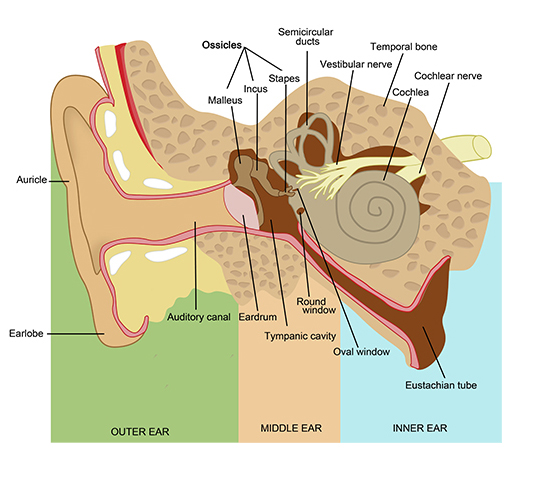
According to findings from Partanen et al. (2013), changes occur in brain processing related to prenatal auditory experiences. This work provides additional support for the hypothesis that the central auditory system within the womb environment has plasticity, or moulding, capacity. More specifically, their findings indicate that neural memory traces can develop if a fetus is exposed to particular sounds repeatedly over time (p. 15147). Listen as Dr. Janet Werker, research chair in the Department of Psychology at the University of British Columbia, explains the concept of tuning during prenatal development.

The normal environment of the fetus is already varied and rhythmical through sounds of the gestational parent’s breathing and digestion, as well as umbilical cord circulation (Graven as cited in Blackburn, p. 535). Prenatal tuning development suggests hearing speech in utero may have the added benefit of preparing neural systems to be able to accurately analyze and discriminate speech sounds when outside of the womb. The concept of plasticity also implies that there may be adverse environmental “noise” experiences – as opposed to structured sounds from speech – that could conversely be harmful to the development of the fetal central auditory system (Partanen et al., 2013, pp. 15147-15148). For example, in animal models, there have been disruptions to normal development in the central auditory system when rat pups were exposed to moderate background noise (Chang & Merzenich as cited in Partanen et al., 2013, p. 15148).
Watch as Dr. Bryan Kolb explains a study he is working on about the impact of prenatal exposure to traffic noise in animal models.
Werker discusses in the next videos what we are learning from research about speech perception after birth when mothers were depressed in their pregnancy and offspring were exposed to antidepressants in utero.
Fetal experience can play an important role in shaping early developmental patterns particularly through repeated sensory exposure during pregnancy. Research shows that fetuses are capable of hearing and responding to external sounds in the third trimester, which can lead to early recognition of filling voices rhythms and speech patterns after birth. This prenatal exposure may also contribute to early language preferences, such as an increased familiarity with mother’s native language and voice; in addition, fetal exposure to maternal stress can influence the development of stress regulation systems shaping how responsive the infant is to stress after birth. Overall, these experiences of the fetus provide a foundation for postnatal sensory recognition, early language orientation, and the development of stress responsiveness in the offspring (Boyd et al., 2025).
Play the following Jeopardy game to review the five areas of prenatal research covered in this section of the module.


