


3.2 Getting along with others

Powerful emotions and aggressive impulses are a normal part of early child development. Learning to regulate emotions and behaviours is essential to making friends and getting along with others.
In the next video, Dr. Jean Clinton, clinical professor of Psychiatry and Behavioural Neuroscience at McMaster University, explains that children need a “predictable other” in order to develop their abilities to get along with other people. Children benefit when adults label and acknowledge children’s feelings and model how to handle challenges.
The next three videos highlight children learning to take turns and get along with one another. In the first, watch as two-year-old Greta tries to manage her frustration while learning how to share with her brother. In the second clip, watch as school-aged children in Pakistan happily take turns playing on swings. In the third video, watch as children play with cars and ramps and receive guidance from an adult. In all videos, the children are learning to share and take turns with others without resorting to the use of aggression.


In the next video, Sir Kevan Collins, former chief executive of the Education Endowment Foundation, discusses many ways that children benefit from collaborating and co-constructing when they are together, especially when they are together in diverse groups with opportunities to negotiate without adult intervention.
In the first scene above, did you see Greta’s mother display any of the guiding responses that Clinton describes?
What do you think may have happened if Greta’s mother hadn’t helped her to overcome her emotions while trying to share?
In the second scene above, the young children in Pakistan are playing on their own at recess, with no adult involvement. How are they organizing themselves? Cooperating? Adjusting to each other’s behaviour? How does this fit with what Sir Collins describes as the benefits of collaboration and what children learn about “living in community”?
What are some examples of attention, emotional and behaviour regulation that you can you see happening in this scene?
Do you think this kind of independent play with peers important to developing self-regulation? Why or why not?
Making friends
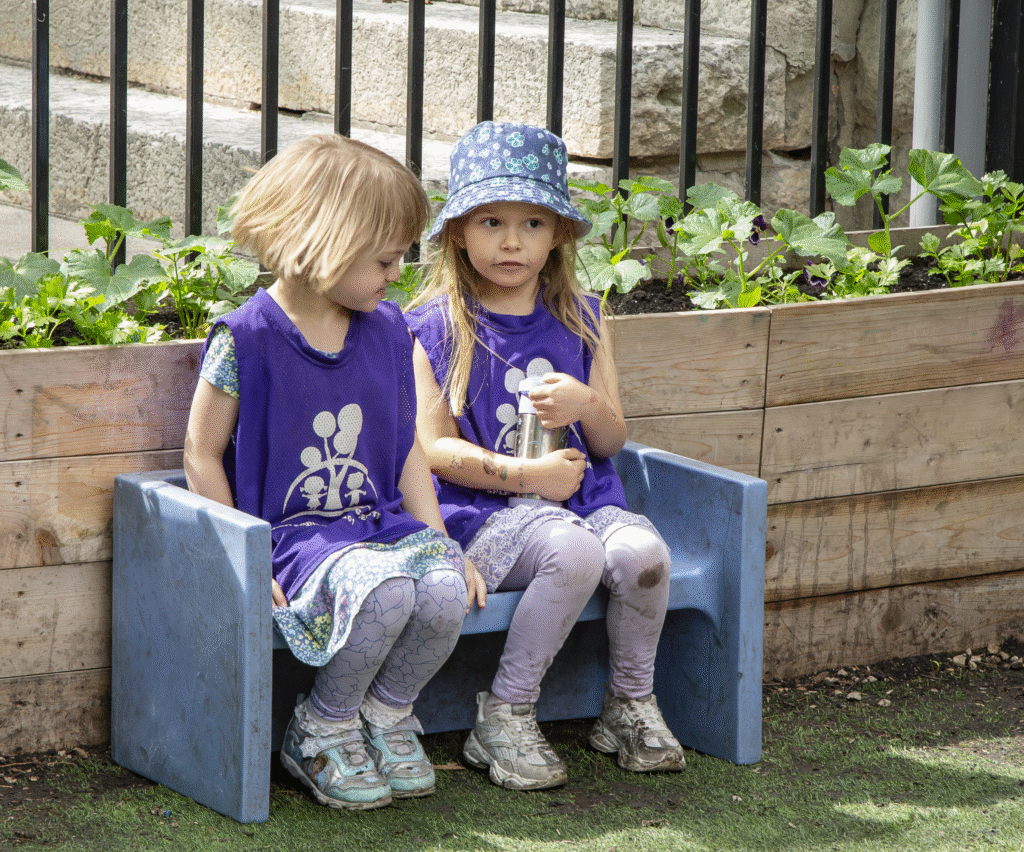
Understanding other people’s feelings is also essential to getting along with others. Aggression and conflict are linked to an inability to understand why others behave as they do. We can help children learn by asking them to talk about other people’s feelings, thoughts, likes and dislikes in the stories they listen to or in everyday conversations. The ability to understand perspectives of others also develops with age. Once children are about six and up, they become much more interested in playing games with rules. This reflects an increased ability to understand other persons’ points of view.
Listen as Dr. Joan Durrant, professor emerita from the University of Manitoba, offers insight into children’s intense emotions and explains how we can use these times to help children understand their feelings.
In the next clip, Durrant suggests strategies that help children learn to regulate intense emotions like anger and manage conflict with others.
As we observe and interact with children we need to consider how to best respond and sometimes, whether we even need to respond at all. In the next video, you will see several children in an outdoor treehouse at Kittiwake Daycare in Vancouver. For the most part, they do not realize that anyone can see or hear them. As you watch the scene unfold, consider if you would intervene at any point and what you would do.

In the next video, Melanie Walters, a supervisor at Kittiwake, explains the importance of observing and knowing the children in one’s care and how she responded when she thought a conflict was developing in the treehouse.
Watch the next video as two young children navigate their way through some minor conflicts. Notice that the adults appear to hang back and see how the children can manage without an adult stepping in. Pay close attention to the subtle ways the children show their growing awareness of each other.

How might these two scenarios (treehouse play and making friends) have been different if adults had intervened?
Entering play with one other child, or a group of children can be natural and easy for some, or very difficult and somewhat stressful for others. We can help guide children who are having a hard time entering play – at the park, in early childhood centres or at gatherings of family or friends.
The next reading from Abilio explains that relationships with peers can be especially difficult for children if they have challenges related to communication, social interaction, motor development, aggression and/or hyperactivity. It also offers suggestions to prevent problems and to encourage positive peer interactions.
In the next video, Dr. David Philpott, professor in the Faculty of Education at Memorial University in Newfoundland, describes that when he was a physical education teacher he observed that young children naturally include children with disabilities. As you watch this video, consider whether this resonates with your experience.
Dr. Lillian Katz is professor emerita of Early Childhood Education at the University of Illinois at Urbana–Champaign. In the next video she discusses how we can engage with shy children as an example of understanding the causes of particular behaviours that may prevent them from engaging with others.
Peer relations/developing friendships require a variety of skills and abilities in all developmental areas. Think about a child you know who has challenges, perhaps related to mobility or to language. What would be some of the additional challenges this child would have interacting with peers?
How can adults support friendships among all children?
Abilio has recommendations for educators and for parents to help children make and keep friends.
Responding to bullying is a challenging task for caregivers. Listen as Clinton explains bullying in young children, and ways that the “adult-culture” influences the context of bullying in child care.
The Lancet has a series on bullying with articles on the mental health implications of bullying and suggestions for researchers and clinicians.


