


2.5 Adversity and resilience
Adversity
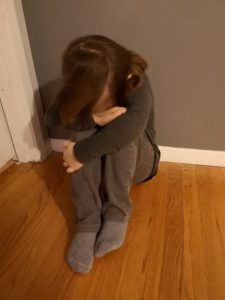
Unfortunately, many children grow up in challenging circumstances and some children grow up in extremely adverse environments. They may live in violent homes and be neglected or abused. Poverty, disasters or displacement may be a constant in a young child’s life. Adverse early childhood experiences include things like abuse and neglect as well as mental illness and violence in the home.
Children need other people to care for them, to take an interest in them and to delight in them in order to thrive. One of the most common challenges in child development is neglect. The next video describes what child neglect means and what to do about it. It is from the documentary, The Beginning of Life.

In the Brain Development module, you learned about toxic stress and its effect on the developing brain. The link below from Harvard University’s Center for the Developing Child includes an infographic and reading about adverse early childhood experiences (ACEs). Explore the information to learn how ACEs are linked to toxic stress, get “under the skin”, and what can be done to reduce their impact.
Listen to Dr. Tracie Afifi, a professor in Community Health Sciences and Psychiatry at the University of Manitoba, identify the original ten ACEs, as well as how the term is sometimes used inconsistently.
Dr. Afifi highlights key contributions of ACEs research over the past 25 years.
There are strong linkages between ACEs and many negative, long term physical and mental health outcomes. What might be some of the things an early childhood program could do that may mitigate adversity and reduce toxic stress for young children?
Can you think of policies, especially in relation to your own community challenges, that may help prevent or mitigate ACEs?
In the following article, Dr. Charles Nelson expands on the concept of ACEs and categorizes risk factors as either biological or psychosocial. The article explores the impact of adversity on the developing brain.
The article uses the categories of biological and psychosocial hazards. What are some examples of biological hazards, both pre- and postnatal? What are some examples of psychosocial hazards?
The article notes that “both biological and psychosocial hazards are often intertwined”. What would be an example illustrating this?
Nelson states that “of the many forms of psychosocial adversity that can impact children’s development, perhaps the most egregious is child neglect” (p.264). What reasons does he give for this statement? Would you agree? If not, why?
Child maltreatment includes neglect of basic needs and physical, emotional and sexual abuse. Some children experience a daily reality characterized by maltreatment. Dr. Tracie Afifi summarizes the multitude of poor outcomes related to child maltreatment.
Maltreatment saps children’s hope and exuberance, leaving behind a residue of despair and apprehension. Click on the next link from the Encyclopedia for Early Childhood Development for a series of overviews on the various types of maltreatment.
Read the following synthesis from the Encyclopedia on Early Childhood Development to review the types of maltreatment and learn about prevention and interventions.
The reading describes 5 forms of child maltreatment. Which is the most commonly reported? Which is most under reported?
Of the three strategy areas outlined for reducing child maltreatment, which are most active in your community?
Why do the authors state that alleviating poverty would go a long way towards reducing child maltreatment?
In the following article, Bick and Nelson (2016) discuss two types of early adverse experiences – maltreatment within the family setting and extreme deprivation in institutional settings. They also review the implications for the developing brain and effectiveness of interventions.
In the next video, Dr. Barbara Fallon, Canada Research Chair in Child Welfare and professor in Faculty of Social Work at the University of Toronto, discusses children who are in circumstances that put them at risk for a poor developmental trajectory. She explains what happens when they are identified to the child welfare system and the importance of child welfare workers knowing about child development and how to both protect vulnerable children and promote well-being.
Child welfare authorities get involved when someone concerned about a child’s well-being notifies them. The ensuing investigation involves a worker making an assessment. If they consider the child to be at risk, they decide how to proceed to protect the child. This could include services to the family, out of home care for the child, and/or police involvement. In the next video, Fallon discusses that Indigenous (Aboriginal) children are over-represented in the child welfare system and explains some of the reasons for this trend.
Dr. Fallon refers to the need for cultural sensitivity for Indigenous children and families.
Is this an issue where you live? If so, are you aware of interventions that aim to address this?
Much more is needed to reduce the numbers of Indigenous children in the child welfare system and support healthier families and communities. In the next video, Dr. Marlyn Bennett, an adjunct professor with the Faculty of Social Work at the University of Manitoba, discusses research on why Indigenous children are so overrepresented in the child welfare system in Canada.
Bennett goes on to explain the continuing impact of colonization on families.
Dr. Michael Yellow Bird, Dean of the Faculty of Social Work at the University of Manitoba discusses the research he has done on the chronic stress that comes from colonization.
Bennett makes the point that most Indigenous children are removed from their homes because of neglect and that this is clearly connected to broader issues such as poverty and poor housing. Do you know of any major or grassroots programs that help mitigate this or, in your opinion, do most systems perpetuate this situation?
Bennett and Yellow Bird discuss colonization. What do you know about colonization in Canada? What does colonization look like today where you live?
In the next video, Dr. Bennett discusses her own experience as a teenager in the child welfare system and her research with other young people in care.
The First Nations Caring Society, led by Dr. Cindy Blackstock, advocates for equity for Indigenous children and is a strong voice for making changes in the child welfare system.
Violent discipline
The most common and widespread form of violence against children is physical and humiliating punishment. Physical punishment, also known as corporal punishment, may not be considered a form of violence as it remains a legal and acceptable form of punishment in many countries.
Did you know?
According to UNICEF global databases from 94 countries, children aged 2 to 4 years experienced violent discipline from their caregivers in the previous month, at alarming rates:
- physical punishment – 63%
- psychological aggression – 67%
- any violent discipline – 75%
Worldwide, 3 in 4 children between the ages of 2 and 4 are regularly subjected to violent discipline (physical or emotional) by their caregivers (UNICEF, November, 2017).
Learn more about world data on child discipline from the UNICEF website.
Dr. Joan Durrant, a child clinical psychologist and child development expert, researches attitudes towards physical punishment and societies that have banned the physical punishment of children. She begins by explaining why some parents spank their children.
Durrant goes on to explain the effects of physical punishment on children.
Do you agree with Durrant’s views?
How does your experience growing up shape your views on physical punishment?
In the next clip, Durrant considers socio-cultural reasons to explain how, when nearly all other types of physical violence are against the law, the physical punishment of children by parents remains legal in Canada.
Durrant also makes the point that child abuse is on a continuum with spanking – it’s physical punishment that has gone out of control.
Joan Durrant is an advocate for a ban on physical punishment and is a co-author of the Joint statement on physical punishment of children and youth.
The evidence is consistent and robust: physical punishment does not predict improvements in child behaviour and instead predicts deterioration in child behaviour and increased risk for maltreatment. There is thus no empirical reason for parents to continue to use physical punishment” (Heillmann et al., 2021, p. 361).
Listen as Joan Durrant describes how Sweden, the first country in the world to ban corporal punishment, provides supports and education to parents and caregivers, all designed to protect children from violence.
The Global Partnership to End Violence Against Children website outlines global efforts and provides resources related to prohibiting and eliminating all corporal punishment of children.
Resilience
Resilience is not an all-or-nothing phenomenon, nor is it fixed in time” (Luthar, 2013, p. 1).
- What does it mean to be resilient?
- Are some children inherently more resilient in spite of adversity than others?
- What factors influence a person’s capacity for resilience?
- Can resilience be taught?
Listen to Dr. Afifi explain the concept of resilience.
Children who do well, despite experiencing some significant hardships in their lives, are often called resilient. Watch the 3 short videos, from the Center on the Developing Child, to learn more about resilience and how to build resilience in children.
Dr. Ann Masten, a leading expert in resilience research from the Child Development Institute at the University of Minnesota, describes the concept of resilience.
Resilience research grew from observations that some children cope and are competent even though they face adversity. Apart from a child’s own biological predispositions, researchers report that protective systems such as nurturing parents, quality caregiving, safe communities, adequate nutrition, and supportive social networks help children thrive.
In the next video, Masten describes protective systems.
Think about children you know that have overcome adversity. Are there any identifiable similarities between these children? What protective systems do you think may have contributed to their resilience?
Are there other examples of protective systems you might add to those mentioned by Masten?
Watch as Masten describes what she has learned about protective systems that she calls “ordinary magic”.
Masten makes an important distinction – the difference between protective factors and promotive factors.
A child’s own capacity to self-regulate contributes to resilience. Masten explains.
Does the connection between optimal self-regulation (calmly focused and alert) and resilience make sense to you?
Can you think of examples where parents/caregivers act as “external regulators” for children? Why do you think this is important?
The following reading, from the Encyclopedia on Early Childhood Development, provides an overview of research on resilience and young children.
Why does Dr. Luthar, in this reading, say we should not speak of “resilient children” but rather of “resilient adaptation”?
Although children’s individual characteristics affect how they respond to adversity, the one factor that transcends all kinds of adversity is having at least one strong, supportive adult in their lives. Why do you think this is so important?
What are the implications for public policy?
The next reading is a summary of resilience concepts.
Listen now as Masten describes the “waves” of research on resilience from 1970 on.
Big demands are made on children’s regulatory systems and abilities to cope when they are exposed to armed conflicts, natural disasters and other emergencies. Dr. Bhutta, Inaugural Robert Harding Chair in Global Child Health at Toronto’s Hospital for Sick Children, points to inherent structures in Pakistan that contribute to young children’s resilience in spite of multiple adversities.
The Encyclopedia on Early Childhood Development provides a comprehensive synthesis on the topic of resilience, including the importance of resilience, what is currently known about resilience, and how resilience can be promoted to support healthy child development.
The following reading from the Center on the Developing Child at Harvard University looks at what can be done to promote resilience and healthy outcomes despite adverse circumstances.
Early Childhood Educators play an important role supporting children and families. Listen to Dr. Afifi explain how this helps promote resilience in young children.
The next page considers the unique ways that play supports children’s developing abilities to cope and become competent. As Yogman et al (2018) explain, “when play and safe, stable nurturing relationships are missing in a child’s life, toxic stress can disrupt the development of executive function and the learning of prosocial behavior; in the presence of childhood adversity, play becomes even more important” (para. 3).


