


2.2 Family relationships

Human beings are social creatures born with a biological need and predisposition to relate to others. Newborns orient to human voices, faces and eyes, allowing infants to learn about people and from people. People are contagious. Our early relationships with parents or other primary caregivers shape how we learn to cope and become competent. Responsive and sensitive nurturing sets the foundation for optimal development.
As you watch the next video, think about how this busy mother manages the needs of her two young sons and her newborn baby.

What does this mother say and do to make all her children feel nurtured?
Why is this important?
How might her parenting style affect family relationships – among the children and between the children and their mother?
Dr. Alison Fleming and her colleagues study mothering in her lab at the University of Toronto. In the following video, Fleming notes that “mothering” is complex and not a single concept.
What processes do you think affect mothers’ (and fathers’) interactions with their babies?
How do you think the mother’s own self-regulation state affects her responses to a babies cues?
How might a mother experiencing depression react to her baby?
Fleming is very interested in the biological aspect of mothering behaviours. In the next clip, she explains how one’s own early experiences and hormones influence how one mothers.
Fleming explains the MAVEN: Maternal, Adversity, Vulnerability and Neural Development project. It is a longitudinal study of mothers from early pregnancy that will follow them and their children through the early years.
Attachment
Attachment refers to the intimate emotional bonds that infants develop with their parents and other primary caregivers. Individual interactions build attachment relationships. Secure attachment relationships between young children and their parents and caregivers are fundamental to helping children learn to cope with stress and regulate emotions, behaviour and attention.
An extensive body of research over the past two decades and more has established a clear link between secure patterns of attachment in infancy and early childhood and later social adaptation. Secure attachment has been associated with better developmental outcomes in areas that include self-reliance, self-efficacy, empathy and social competence…. Infants with nonsecure attachments have been shown to be more prone to later problems in adaptation that include conduct disorder, aggression, depression and anti-social behaviour” (Moran, 2020, para. 5).
Attachment is easier when parents are attuned to their babies. Attunement refers to how parents and other caregivers react to an infant’s signals. Well-attuned caregivers detect what their babies are feeling and are able to reflect those emotions back in their facial expressions, voices, and other behaviour.
Listen now as Dr. Jean Clinton, clinical professor of Psychiatry and Behavioural Neuroscience at McMaster University, discusses the importance of responding predictably to babies’ needs for the development of secure attachment.
The Encyclopedia on Early Childhood Development offers an overview of attachment theory and research. The Synthesis defines attachment, describes three attachment patterns, and considers influences on attachment relationships.
What systems are in place in your context to help support the parent-child attachment process?
What are some of the factors in your context that act to disrupt the attachment process?
What kinds of regional or national policies can support families and their relationships with their children?
Verbal and non-verbal communication contribute to attuned interactions and attachment relationships. The next video is an overview of attachment and stresses paying attention to the subtle signals of babies. As you view the video, notice how infants engage in chains of communication with caregivers by using vocalizations, gestures, facial expressions and body movements. Brief exchanges gradually develop into sustained, co-regulated chains of communication.

Were there examples of attunement between the parents and their babies in the video that stood out for you?
What examples of co-regulated chains of communication did you see in the video?
In the next video, Dr. Edward Tronick explains the Still Face Experiment – a way to investigate what happens when parents are not so “attuned” with their babies. It is hard to watch the mom and baby participating in this experiment – but as you watch, consider why this kind of research is important.
What does Dr. Tronick mean by the “good, bad and ugly”? What are the applications of this message?
This classic research paradigm has been modified to look at other sorts of typical disruptions to parent-infant interactions that might occur in daily life. Myruski et al. (2018) looked at mobile device use as one example of when parents are present, but may be distracted and unresponsiveness. Their research with 50 infants found that this may have negative consequences for children’s social and emotional development.
What are your thoughts about these preliminary research findings?
What are sorts of everyday activities might mimic the parent’s “still face”?
A common situation reflective of parent-child attachment is when parents leave their child with caregivers as they head off to work. Watch the following parent-child separation scenes while considering your knowledge of attachment and parent-child communication.

Consider the wide range of children’s responses to their parents’ leaving in these clips. What might be some factors that might have affected each child’s response?
What did each parent do to try to make the separation easy on the children?
Children’s close relationships with their parents continue well beyond infancy and the preschool years. How parents talk to their children about school seems to be more important than other forms of parent involvement. Dr. Carl Corter, professor emeritus at the University of Toronto’s Ontario Institute for Studies in Education, explains.
The booklet below was developed for First Nations and Metis parents and caregivers in Manitoba. It presents information for parents and caregivers on bonding, forming secure attachments with children, and connecting with extended family and community. Learn about some of the traditional practices used to develop attachment, and some of the impacts from residential schools, medical institutions and foster homes that had devastating effects on families developing relationships and attachment.
The next reading discusses attachment and health outcomes, why attachment is important for Indigenous (Aboriginal) child and family wellbeing, how caregivers can strengthen and support healthy attachment relationships, and signs that attachment relationships might need help. The authors also make the point that parenting styles and attachment practices vary between different Indigenous (Aboriginal) communities and groups.
This reading refers to the issue that in Indigenous (Aboriginal) communities many of the parents and grandparents have experienced foster care or the residential school system.
How do you think these experiences might affect their parenting and caregiving abilities?
In the next video, Dr. Marlyn Bennett, the director of the University of Manitoba’s Master of Social Work Program Based in Indigenous Knowledges, defines kinship care and discusses the role of the extended family and wider community in caregiving. Bennett also explains that caregivers may require financial support to take care of their “kin”.
How does Bennett’s definition of kinship care fit with your own experiences with family or the families you work with?
Attachment theory grew out of early twentieth Century Canadian work on a theory of personality, called security theory. Read about Canada’s contribution to attachment theory in the first article in the following Bulletin from the Centre of Excellence for Early Childhood Development.
The Encyclopedia on Early Childhood Development has extensive articles that summarize the research about what we know about attachment and how we can intervene with families to support secure attachment.
Explore the About Kids Health website at the Hospital for Sick Children for more resources on attachment.
Parenting style

Dr. Dan Keating, professor at the Institute for Social Research at the University of Michigan, summarizes what a multitude of research studies reveal. Parenting matters a lot and carries forward throughout one’s life. He points to two important dimensions: warmth and responsiveness and setting limits or boundaries.
How do Keating’s comments relate to your own values about parenting?
Why are limits so important to children?
Almost fifty years ago, psychologist Dr. Diane Baumrind (1968) defined parenting skills along the same two dimensions that Keating outlines in the video:
- Responsiveness – parents’ ability to be attuned to a child and to respond to a child’s needs and signals
- Boundaries – parents’ ability to set and maintain limits that structure a child’s environment
In the next video, Clinton discusses how different parenting styles impact children, specifically brain development.
The relationships and interactions between parents/caregivers and children provide a foundation for development and learning. The next reading, from the Encyclopedia on Early Childhood Development, explains that researching “optimal” parenting styles is challenging given the variety of variables that can influence child development outcomes. Try the review game after the reading to check your understanding.
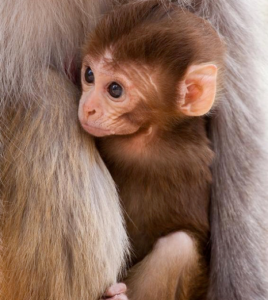
Dr. Stephen Suomi, chief of the Laboratory of Comparative Ethology at the National Institute of Child Health and Human Development in the United States, is a researcher who studies the social lives of rhesus monkeys. As Suomi says, “rhesus monkeys are clearly not furry little humans with tails” (Suomi, 1999), but we do share much of our genetic inheritance. His research reveals some very interesting insights into how infant temperament and mothering style can have a powerful impact on adult monkey behaviour and social status (Suomi describes his primate laboratory in the Brain Development module).
Watch as Suomi describes what happens when infant monkeys, who are genetically predisposed to be highly reactive, are placed in the care of highly nurturing foster mothers.
Fathers
Looking at fatherhood across time and cultural settings is important as it broadens our understanding of the changing role of fathers, and contributing factors to their different level of engagement within the family” (Roopnarine, 2016, para. 2).
The next video shows fathers from around the world talking about how meaningful it is for them to be closely involved with their young children. It is from the documentary, The Beginning of Life.

Research on fathers and the impact of fathering on child development is a relatively new research area. Jean Clinton describes some of the things we are learning about the unique role of fathers.
In the next video, Brian Russell from Dad’s Central Ontario, concurs with what Clinton says about different approaches to attachment for fathers and mothers. He explains what this means for those who develop programs to engage fathers. In the second video, Russell discusses father engagement in more detail.
The Encyclopedia on Early Childhood Development provides an overview of research in this area, along with resources and recommendations for policies and programs.
What did you learn that struck you as important about father involvement in the videos and readings in this section?
To what extent are fathers involved in early childhood programs in your region? What are some factors that may determine whether or not fathers are involved?
Siblings

Sibling relationships play an integral role in how children learn to self-regulate, adjust to new circumstances and overcome challenges.
As you watch the next video of two siblings playing together, consider how each child might benefit from this experience.

While sibling rivalry is a common concern for parents and caregivers alike, recent research is beginning to highlight the positive role that sibling relations, and even sibling conflict, has on a child’s social and cognitive development. The next article from the Encyclopedia on Early Childhood Development looks at sibling relations.
How do sibling relations in early life help set the stage for learning to manage intense emotions and conflict resolution skills?
Thinking back to your own childhood, how did sibling relations influence your life?
Can you think of ways parents and caregivers may promote caring relations between siblings?
Dr. Jennifer Jenkins, a professor at the Ontario Institute for Studies in Education, explains what her research is revealing about differences in parenting within families.
What does Jenkins mean by differential parenting? How might if affect a family and sibling relationships?
Why is fairness so important to children?
How can parents be helped to be more reflective about their parenting style?


