


3.2 Observing child development

To say that each child is an individual is a common phrase, but what does it really mean? Is understanding child development the same as understanding an individual child?
Understanding children and responding appropriately is a big part of the kind of sensitive and responsive care that nourishes early brain development (more on this on the next page).
High quality early childhood programs for children are based on a sound knowledge and appreciation of child development theories and principles, and a deep and respectful appreciation for the interests and qualities of the particular children in the program.
Careful observation helps adults understand each child and see the world from his/her perspective.
Although children are “wired” to interact with others from birth, young children’s social signals are not always obvious, especially before they can speak. Becoming a skilled observer is key to understanding a child’s perspective. As you watch these interactions between seven-month-old Lucy and her dad, think about what she might be “saying” to her dad in each situation.
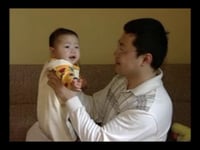
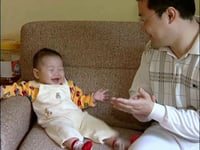
In the first scene, how does Lucy communicate she is not that interested in playing? In the second scene, what is different about Lucy’s communication?
How does her father show he is attuned to her signals in the second scene?
How is this experience-based brain development?
In the next clip, Dr. Joan Durrant, child-clinical psychologist and professor emerita of Community Health Sciences at the University of Manitoba, and Executive Director of Positive Discipline in Everyday Life (PDEL), explains parents can view their child’s negative behaviour from a different perspective if they have some understanding of developmental tasks and what that behaviour means in terms of how their child is growing and changing. It is a good reminder for anyone who works with young children.
Observations are more meaningful if they are based on knowledge of child development. Children are individuals, but knowing what to expect at different ages is helpful. Milestones of development are general guidelines of what to expect of children at different ages. It is important to consider all areas of development and the “big picture” of how an individual child is doing.
In the next Interact, scroll through the children’s photos and then click on the domains of development. You will see examples of some of the things a child at each age might be able to do.
Something to try… Think of a particular child you know and look up the milestones for his/her age range. How does what you know about the child fit with the described milestones?
The following website reviews what to expect of children at different ages.
The next reading, A Child Becomes Strong, provides culturally specific teachings and information about child development within a First Nations context. Learn about child-rearing practices and stages of life in which parents, grandparents, and Elders all play an important role in the child’s development.
In the next video, Anne Rundle, a child development curriculum developer and consultant, describes “the good life” and some of the ceremonies and celebrations unique to this period.
On the next page, you will learn more about how regular, daily experiences impact brain and overall development. You will also learn more about what it means for adults to be both sensitive and responsive in their care routines.


