


2.3 Memory
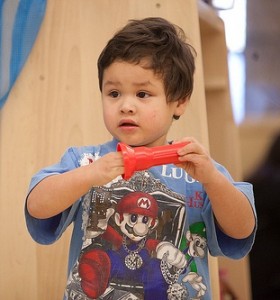
Our memories form the basis for our sense of self, guide our thoughts and decisions, influence our emotional reactions, and allow us to learn. As such, memory is central to cognition and cognitive development” (Pathman & Bauer, 2020, p. 1).
As the human brain develops in the first years of life, so does the capacity for memory. Memory is an important tool for learning and communicating.
Dr. Ron Barr is a professor emeritus in the Department of Pediatrics, Faculty of Medicine at the University of British Columbia. Researchers like Barr have confirmed that infants, even newborns, definitely do have the capacity for memory. In the next clip, Barr discusses how researchers can tell that infants remember experiences that happened while they were in the womb.
Did this study surprise you? What might the implications be?
Dr. Charles Nelson has studied memory and face/object recognition. Face recognition seems to be related to the development of attachment – the strong intense and emotional connection between an infant and primary caregivers. In the following two clips, Nelson gives an overview of some of the memory research done in his laboratory.
What did you find most interesting about this research?
In the next video, Nelson describes the different types of memory and how they develop in the brain in infancy and early childhood. He refers to parts of the brain that you learned about on the Brain Architecture page (hippocampus, temporal lobe and frontal lobe).
What is your earliest memory? How does it fit with Nelson’s explanation of the typical age at which people usually report their earliest memories?
What does it mean for people working with young children that children’s abilities are closely tied to the maturation of different areas of the brain?
In this section, you have seen some examples of early brain development research. Go to the next page to play a review game to check your understanding.


