


2.2 Early childhood education
‘Early childhood education and care’ or ECEC…. refers to group programs for young children based on an explicit curriculum, delivered by qualified staff, and designed to support children’s development and learning. Attendance is regular and children may participate on their own or with their parents or caregivers. It includes regulated child care, but also school-operated Kindergarten, Pre-Kindergarten, Early Kindergarten, Junior Kindergarten, nursery school, Pre-Primary, Maternelle, and parent and child centres, as well as Aboriginal Head Start” (Atkinson Centre, 2020, p. 1).
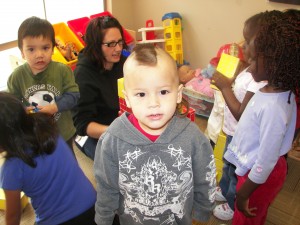
There are a variety of child development programs available for children before they enter kindergarten (usually at age five). These programs may provide child care while parents are at school or work, may provide a particular intervention, or may simply provide opportunities to socialize and play with other children. In general, options include licensed early learning and child care centres, family child care homes, and part-time nursery schools or junior-kindergarten programs.
The Early Childhood Education Report 2023 highlights key information about the sector across Canada. Explore this interactive map to find out how the provinces and territories compare on a number of benchmarks. For instance, see the percentage of preschool children who take part in an early childhood education program in provinces across Canada.
Studies about the effect of early learning and child care arrangements on children’s development have focused on the:
- impact on mother-child relationship,
- impact on children’s social, emotional and cognitive development, and
- quality of child care environments.
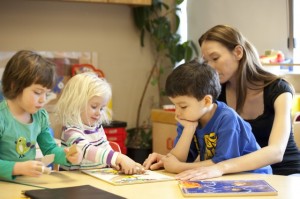
The Effective Provision of Pre-School Education (EPPE) studies the long term impact of participation in an early childhood education program. It is the first large European longitudinal study of a sample of young children’s development between the ages of three and fourteen years.
The following slides show some highlights from the EPPE studies.
Siraj-Blatchford, et al, 2008 describe that the EPPE research team conducted twelve case studies of settings with positive outcomes and they outline these characteristics of effective practice:
- cognitive and social development viewed as complementary
- strong leadership and long-serving educators
- intentional educational focus
- mixture of child- and educator-initiated activities
- educator-child interactions that involved sustained shared thinking (when two or more people discuss an idea, problem-solve, etc., and thinking is extended because of the interaction)
- educators had curriculum and pedagogy knowledge & expertise
- strong parental involvement – particularly shared educational aims for children
- formative feedback to children during activities
- behaviour policies that support self-regulation rather than use a behaviourist approach
Think about an early learning and child care program with which you are familiar – are these characteristics evident in that program? What improvements could be made?

Research reveals the enduring and positive child development effects of high quality early childhood education and child care programs. However, research does suggest that mediocre and poor quality child care is associated with modest but long term developmental risks. The following synthesis from the Encyclopedia on Early Childhood Development cites the prevalence of early childhood education and care in many European and North American countries – yet raises concerns about the quality of many of those programs, and the negative consequences these low quality programs can have.
Gunnar explains how children who are more fearful and anxious experience poor quality and good quality child care environments. What is the impact of poor quality child care on children who are fearful and anxious?
Are you surprised that children’s cortisol levels – a biological measure of arousal – are typically higher when they attend a child care centre?
What are the implications for organizing late afternoon activities in a full day child care centre?
Parents typically want to make the best possible care arrangements they can for their children. Abilio, formerly known as the Centre of Excellence for Early Childhood Development (CEECD) and the Centre de Psycho-Éducation du Québec (CPEQ), prepared a summary of the key messages based on what research tells us about quality child care.
What are your thoughts on the benefits of early childhood education for young children?
What difference does quality make?
Over 50% of Canadian children now attend some kind of early education program and as investments in the early years increases, so will the access to and participation in these programs. Research has shown that the quality of care in these programs matters. On the next page, you will read about specific early intervention programs – their approaches and their results.


