


1.1 Contexts
People develop in the context of particular times and places. Children are nurtured in many different kinds of families, homes and communities.
Consider…
Jacob

Ziba

Four-year-old Ziba lives in a suburb of Moncton, New Brunswick. She lives with her mother and older brother, Ben, in a three bedroom house with a backyard…
Michelle

Four-year-old Michelle lives in assisted social housing in downtown Montreal with her twin sisters, two-year-old Alisha and Jean-Marie. Her mother is a student…
Growing up in Canada, what do these children have in common?
What are some differences in their daily experience and family contexts? How do you think these differences might affect them?
The surrounding terrain and available physical resources also contribute to the ease or difficulty of everyday life. In many countries there is tremendous geographical variation. In Canada, for example, think about the differences in geography between southern British Columbia and Nunavut or the prairies and south coast of Nova Scotia. And there are many other factors in the environments that surround children that influence their development and lives. For example, think about the different cultural contexts in each family and community. Think about what supports and services are available for families. What about economic opportunities for families and communities? What does it mean for a child’s daily life?
Bioecological systems theory

One of the most influential theories of human development, Dr. Urie Bronfenbrenner’s Ecological Systems Theory (1979), emphasizes how the environment influences a child’s development and how the developing child influences his or her environment. Bronfenbrenner considered human development as occurring within a complex system of relationships that occur within and between various “layers” of environments. He proposed a framework for organizing sets of environmental systems. He conceived that the child’s world is organized “as a set of nested structures, each inside the next, like a set of Russian dolls” (1979, p. 22). These systems range from the most immediate setting, such as family, to more remote contexts that do not directly involve the child, such as society’s legal system or beliefs. Bronfenbrenner recognized the influence of a child’s own biological system and incorporated that into his theory, renaming it the Bioecological Systems Theory.
Bronfenbrenner labeled the environmental systems of his theory as:
- Microsystem refers to the child’s immediate settings (e.g., home, school, early learning program). Each of these contexts might include parents, siblings, peers, teachers or caregivers. The child has direct interactions with the individuals she or he encounters in the immediate environment and is both influenced by and influences those individuals.
- Mesosystem is the interrelationships among the components of the microsystem (e.g., parents interact with caregivers and teachers).
- Exosystem is made up of settings that influence a child’s development but do not have direct interactions with the child. For example, a parent’s workplace and co-workers affect the child’s life. If there are employee policies (such as family leave time or flexible work schedules for parents with young children) in place that value family life, the impact is likely to be more positive than if the parent is required to work long hours or to travel frequently. At the same time, the parent’s work place is affected if the child is often sick.
- Macrosystem that surrounds the first three systems represents ideological and institutional patterns of a particular culture or subculture. Children who grow up in an Inuit community in northern Canada experience a different social ideology than children who grow up in an affluent suburb outside of Toronto. Children who grow up in Canada experience a different social ideology than children who grow up in Italy or Uganda.
- Chronosystem refers to the time-based dimension of his model. Over time both the child and her or his environment undergo change, and change can originate within the individual (e.g., severe injury or illness, puberty) or in the external world (e.g., birth of a sibling, starting at a child care centre, parental divorce, unemployment).
The next activity reviews these terms. Try the matching exercise to test your understanding.
Urie Bronfenbrenner’s bioecological theory is a major influence in understanding child development. For instance, his model helps us understand how social and economic circumstances of a child’s family, community and country can profoundly affect the ability to provide conditions that are most conducive for children’s health and development. In the next clip, the late Dr. Clyde Hertzman, founding director of the Human Early Learning Program (HELP) at the University of British Columbia, describes some of the important factors that can support families and children.
Cultural nature of human development
Dr. Lev Vygotsky, a Russian psychologist in the early 20th Century, understood individual human development within its social, cultural and historical context.
Dr. Barbara Rogoff (University of California Santa Cruz) and her colleagues (2003) define human development as a cultural process that takes place through changing participation in cultural activities. Childrearing practices are based in culture and reflect local views about the world and how we should ready children for participation in that world. Cultures select tasks for children. Different circumstances result in very different social skills, cognitive abilities and feelings about one’s self and others. The next readings from Early childhood in focus 6: Culture and learning (Bernard Van Leer Foundation) describe different cultural approaches to caregiving.
What was your experience of caregiving as a young child? How do you think the cultural context of caregiving you experienced shaped you?
The following video illustrates the importance of family, play and cultural relevance for children’s programs in Inuit and First Nations communities across Canada.
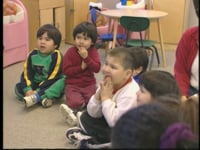
The early childhood programs in the video all strongly advocate that culture be the foundation of the programs for their children. What are the challenges faced by Inuit and First Nations communities that want to establish culturally relevant programs for their children?
The Aboriginal Children’s Survey was conducted one time only, on a sample of individuals who reported Aboriginal ancestry in Canada’s 2006 Census. The following article reports on the type of child care arrangements used, rates of use, as well as family and social factors for children aged 2 to 5. The study authors report that the study, “demonstrates that traditional and cultural values and customs and Aboriginal language within the child care environment can have positive influences on young First Nations, Métis, and Inuit children’s outcomes” (Findlay & Kohen, 2010).
Children are born into a family, culture, place and time and these environments impact their development. The role and importance of culture in development and learning is a key part of any discussion on early human development. However, for Indigenous peoples in Canada, their cultural traditions and values were actively denigrated – some cultural practices even outlawed – for centuries by the government. Children were placed in residential schools away from their family and culture which led to years of intergenerational trauma. It has been a struggle to maintain their traditions and languages but the growth of early child care programs that are based on Indigenous cultures is one step forward.
So far, you have explored some of the various contexts important in children’s lives. The following interact reviews some key terms.
Intersectionality
Intersectionality is the complex combination of social factors that form a multi-layered and co-existing identity of an individual. These factors are influenced by experience, history, others’ perspectives, events and more, and can emerge into inequities for people.
Explore the Wheel of Privilege and Power from the Government of Canada, below. This wheel demonstrates the multiple social factors of our identities and the collective power, privilege, or marginalization that exists as a result. As you view the diagram, notice the compound impact of various social factors – both positive and negative.
Now that you have reviewed some social factors that make up a person’s identity, consider your own. Below you will be able to practice how much or how little power and privilege you have in society.
Think about the ways intersectionality impacts children and families. What opportunities do children’s families have given their intersectionality?
What barriers might children’s families face due to intersectionality?
Funds of Knowledge
While intersectionality can result in inequities, when Funds of Knowledge of families are used in early childhood programs, children can feel meaningfully included.
Many children and their families have valuable skills and abilities that are assets. These assets are called Funds of Knowledge (FoK). FoK is the accumulation of cultural and social information that includes diverse, unique and personal experiences with values, roles, skills, ideas, knowledge, beliefs, attitudes, perspectives, traditions, rituals, resources and practices, gained through relations at home, or within the larger social community. In their research Moll, et al. (1992) outlined some FoK that could contribute to any learning environment. These included:
- Agriculture and Mining
- Material & Scientific Knowledge
- Economics
- Medicine
- Household Management
- Religion
Within each of these categories are more detailed knowledge and experiences.
Families may have many different types of Funds of Knowledge. See other examples of these assets, below.


