Introduction to stress
Stressors are defined as potential threats to an individual. The stress response is fundamentally important for us to be able to adapt to stressors. How we identify something as stressful is dependent on our perception of the stimuli. These can be a combination of early experiences, as well as learned and unlearned factors. For example, the presence of a dog can be very stressful for one person and not stressful at all to another person.
The activation of the stress response is hierarchical and involves the brain’s cortex, limbic system and brainstem. Stress activates two systems in the body simultaneously: 1) the sympathetic nervous system, also known as the “fight or flight” response that the body uses for brief emergency responses; and 2) the Hypothalamic-Pituitary-Adrenal system, known as the HPA-Axis. The HPA axis becomes the dominant response to prolonged forms of stress.
Outputs from these two stress responses help make certain that appropriate resources are focused to help stress adaptation. However, these responses encroach on other biological systems such as digestion, reproduction and even growth; and adaptively, they encroach on the pain system (nociception). Prolonged stress responses have harmful effects on cognitive, psychological, and biological function.
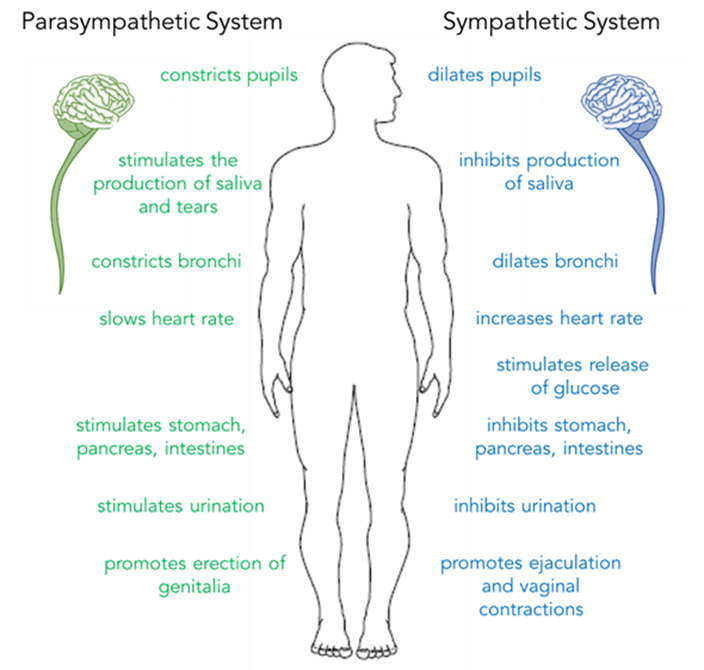
The sympathetic nervous system along with its counterpart, the parasympathetic nervous system are part of the autonomic nervous system (ANS). The ANS is the part of the nervous system that acts involuntarily and regulates our body’s functions such as breathing, heart rate, digestion, and arousal.
Emotional situations and experiences arouse our ANS. Each situation, experience, or environmental condition evokes its own special combination of sympathetic and parasympathetic arousal. The picture below demonstrates the role of both the parasympathetic and sympathetic division of the ANS in our body functions. When we are stressed and our sympathetic nervous system is activated, adrenaline (epinephrine) is released which primes the body for action (to fight or flight).
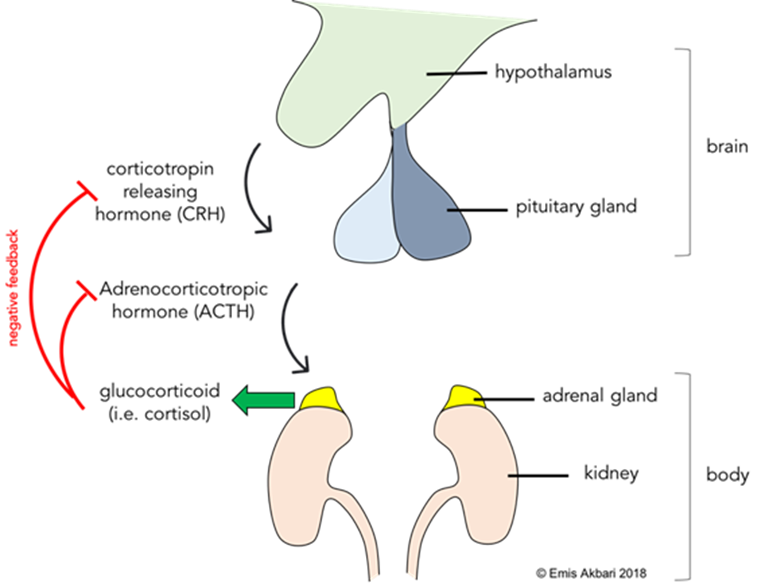
The HPA response is a cascade of biological events that occur resulting in the release of our stress hormones known as glucocorticoids. The primary glucocorticoid that is released is known as cortisol. The first step in this response is the release of corticotropin releasing hormone (CRH) from the hypothalamus. This results in the release of adrenocorticotropic hormone (ACTH) from the pituitary gland. Finally, ACTH release results in the release of cortisol, a glucocorticoid, from the adrenal gland. Once cortisol is released and circulates in our blood, in situations of temporary stress, it results in the shutting down of CRH from the hypothalamus and ACTH from the pituitary. This is known as negative feedback.
Below is a diagram that depicts the cascade of events including the negative feedback system of the HPA Axis that occur when we perceive stress.